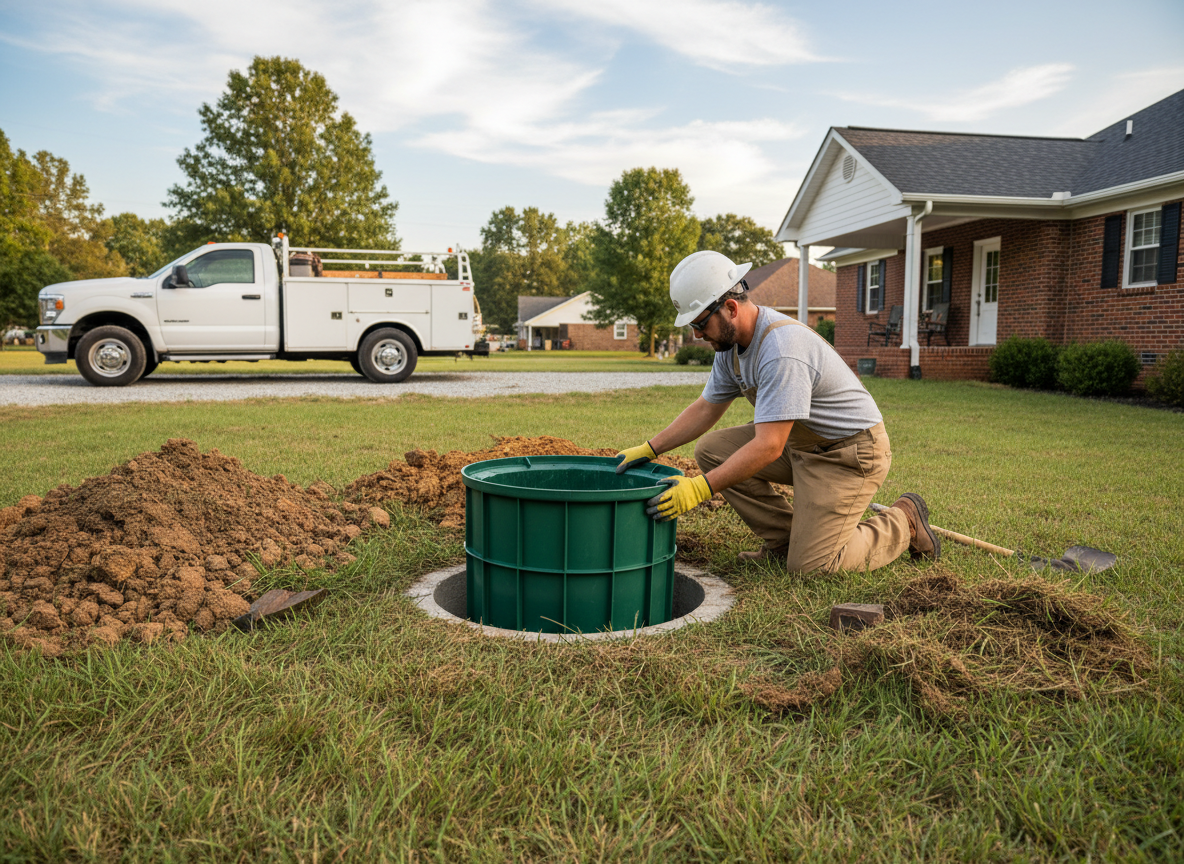
In Asheboro neighborhoods from North Asheboro to rural stretches near the Uwharrie Mountains, many homes sit on lots without sewer access and rely on tanks originally buried deep under turf or driveways. When we arrive for septic pumping, we often find inlet and outlet tees covered by years of soil and grass, especially where heavy rain saturates the ground and moves dirt around the tank lid. We check for signs like gurgling drains or sewage odor near the house, then probe the exact location using the distribution box and any visible baffles before marking the dig area. Rocky Uwharrie soils and Piedmont red clay make excavation slower than sandy ground, so we plan the job around existing tree roots and the tank's original placement rather than guessing from surface clues.
Once the tank is located we expose the lid and measure the depth to decide riser height so the new lid sits just below grade without creating a tripping hazard. In subdivisions off US-220 or NC-49 where newer homes share the same soil challenges, we often see pump chambers with float switches that need separate risers for safe service later. We verify the effluent filter condition and check sludge and scum layers before installing the riser sections, making sure the connection seals tightly against groundwater intrusion during heavy rain events common in the humid subtropical climate. This step prevents future backups when the drain field becomes saturated and keeps the access point usable for routine cleaning without repeated digging.
Homeowners near the Deep River or Lake Lucas frequently request risers after a single bad experience with a buried tank during wet seasons, when water pools over the lid and complicates pumping. We install concrete or heavy-duty plastic risers with secure lids that resist shifting in the clay-heavy soil, then backfill carefully to avoid damaging any nearby distribution box or drain field lines. On lots with aerobic systems or garbage disposal loads that increase solids, we add an extra riser over the pump chamber so float switches and alarms stay reachable year-round. The work finishes with the site restored to match the surrounding yard so the only visible change is a clean, level access point ready for the next service visit.
Technician insight
In Asheboro the thing that catches most people out with Septic Riser Installation is how fast red clay turns to mud after one heavy rain and hides the original lid completely. Older tanks off NC-49 often sit deeper than newer ones near the North Carolina Zoo because builders used whatever soil was on site, so we always dig a test hole first instead of assuming standard depth.
Buried Lid Near Seagrove
A homeowner called after noticing slow drains following several days of rain on their rural lot. We located the tank under thick grass and found the original lid cracked with roots growing through the seam. We installed two concrete riser sections with a new lid, sealed the connection, and restored the yard so the next pumping visit would be straightforward.
Septic Riser Installation Services We Offer
✓Concrete Riser Installation
Adds durable concrete risers over older tanks so pumping crews reach baffles and tees without repeated excavation on clay lots near Downtown Asheboro.
✓Pump Chamber Riser Upgrade
Installs a dedicated riser and lid on the pump chamber to keep float switches and alarms accessible during heavy rain periods common along the Deep River corridor.
✓Effluent Filter Access Riser
Places a riser directly above the effluent filter so homeowners can inspect and clean it between septic pumping visits on rural Randolph County properties.
✓Inlet and Outlet Tee Riser
Brings the inlet and outlet tees to grade level, reducing the chance of damage from tree roots or shifting soil in rocky Uwharrie areas off US-64.
✓Distribution Box Riser Addition
Adds a riser over the distribution box to allow quick checks for saturated drain field conditions after heavy rains in North Asheboro subdivisions.
How it works
- 1
Locate And Expose Tank
We use site records and probing to find the buried tank on lots with red clay and rocky soils, then carefully remove turf without disturbing nearby drain field lines.
- 2
Assess Depth And Condition
We measure from lid to grade, inspect baffles, inlet and outlet tees, and note any sludge buildup or tree root interference before selecting riser height.
- 3
Install Riser Sections
Sections are stacked and sealed to the existing lid, with the final lid positioned just below grade to handle heavy rain runoff common in the Piedmont.
- 4
Backfill And Restore Site
Soil is replaced and compacted around the riser, then the yard is leveled so future septic pumping visits require no additional digging.
Pricing
Cost depends on tank size, access and condition.