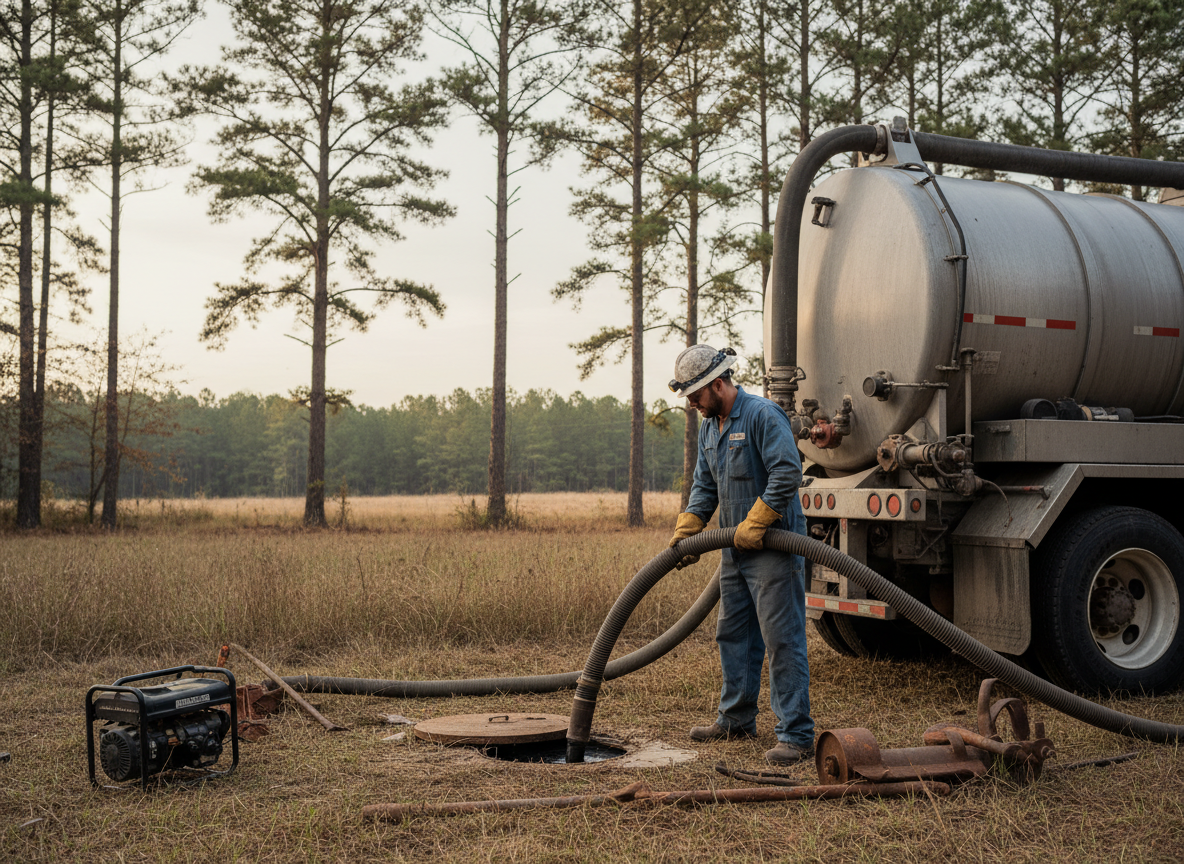
On rural lots off sewer in Asheboro and throughout Randolph County, septic tanks sit in Piedmont red clay that holds water after heavy rain and in rocky Uwharrie soils that make drainage uneven. We arrive at homes in North Asheboro and near the North Carolina Zoo to measure sludge and scum layers, check inlet and outlet tees for blockages, and inspect baffles before any pumping begins. Older original tanks often lack risers, so we locate buried lids by probing the yard and clear tree roots that have grown toward the tank from nearby wooded areas.
Heavy rain in the humid subtropical climate can saturate the drain field and push effluent back into the tank, which is why we always check the distribution box and pump chamber float switch during a visit. On properties along the Deep River or off US-220, we look for signs of gurgling drains or sewage odor that signal a saturated drain field rather than a simple full tank. After pumping, we clean the effluent filter if one is present and note any garbage disposal load that has added extra solids to the system.
Access matters on lots near Lake Lucas or along NC-49 where driveways are narrow and tanks sit under patios or landscaping. We use the right equipment to reach tanks without damaging the yard, then verify that the outlet tee is clear so wastewater flows properly to the drain field. In newer subdivisions around Seagrove and Lexington, we find tanks installed with modern lids that still require regular pumping because the clay soil limits how much the field can absorb during wet periods.
Technician insight
In Asheboro, the thing that catches most people out with Septic Tank Pumping is how fast heavy rain saturates the red clay on rural lots, sending water back into tanks that were pumped only months earlier. Homeowners often assume the tank is full again when the real issue is the saturated drain field around older original tanks.
Backup Near Downtown Asheboro
A homeowner off US-64 reported gurgling drains and sewage odor after several days of rain. We found the tank nearly full with solids and the drain field holding water in the clay soil. After pumping and clearing the outlet tee, flow returned to normal and the odor stopped.
Septic Tank Pumping Services We Offer
✓Baffle and Tee Inspection
We examine inlet and outlet baffles plus tees for cracks or buildup that lets solids reach the drain field.
✓Effluent Filter Cleaning
Filters are removed, rinsed, and reinstalled to keep solids from clogging the outlet pipe during pumping.
✓Riser and Lid Installation Check
We locate buried tanks, verify existing risers are sealed, and confirm lids sit at grade for future access.
✓Pump Chamber Service
Float switches and pumps in aerobic or pump-chamber systems are tested after the main tank is emptied.
✓Drain Field Assessment
We check for standing water or odors that indicate a saturated drain field before or after pumping the tank.
How it works
- 1
Locate and Expose the Tank
We find the tank using site records and probing, then uncover the lid on lots where heavy clay or tree roots have covered access points.
- 2
Measure Sludge and Scum Layers
Depth readings are taken through the inlet and outlet to determine how much material needs removal before pumping starts.
- 3
Pump and Clean the Tank
Contents are removed completely, baffles and tees are cleared, and the interior walls are rinsed to leave the tank ready for use.
- 4
Inspect Components and Restore Access
Filters, switches, and the distribution box are checked, then lids are replaced and the area is left as found.
Pricing
The cost of septic tank pumping depends on the size of your tank, how easily we can access it, and its current condition.