2026-11-08 ·
Signs Your Drain Field Is Failing in Piedmont Clay
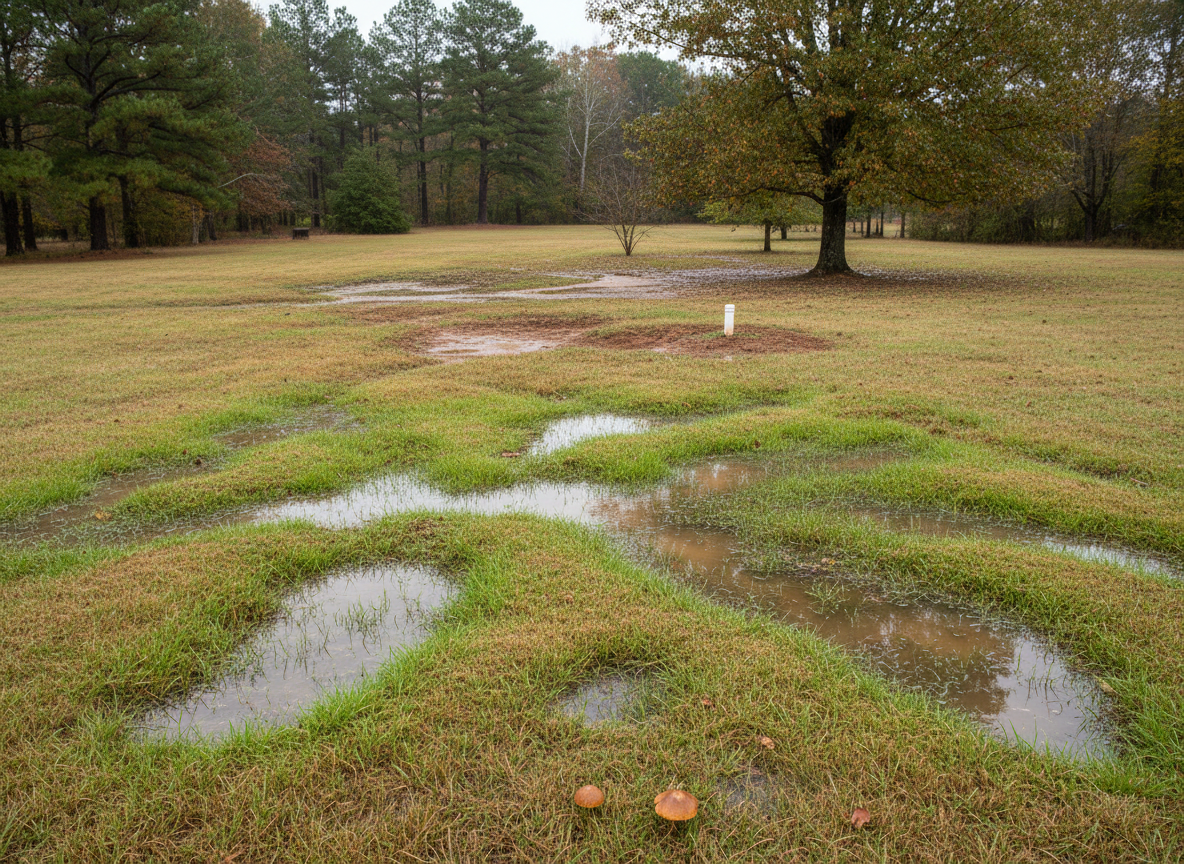
In Randolph County's Piedmont clay, the first reliable sign of drain field failure is persistent wet or spongy ground over the absorption area even days after rain stops, because the dense subsoil prevents proper percolation in the humid subtropical climate.
Surface Ponding After Moderate Rain
Piedmont clay around Asheboro expands when saturated and shrinks when dry, creating a cycle that compacts the soil above older drain lines in North Asheboro neighborhoods. Homeowners notice shallow puddles forming directly above the field within hours of a typical summer thunderstorm, while adjacent lawn areas drain normally. This pattern differs from simple roof runoff because the water carries a faint sewage odor and remains for three to five days. In Downtown Asheboro, where many systems date to the 1970s, the clay layer often sits only 18 to 24 inches below grade, so even 1 inch of rain can push effluent to the surface. Checking the area after the next rainfall event gives the clearest confirmation without excavation.
Slow Drains and Gurgling Fixtures
When the drain field can no longer accept daily wastewater volume, fixtures inside the home begin to drain slowly and gurgle. In Randolph County homes near the North Carolina Zoo, this symptom appears first in lower-level baths because the field sits at a higher elevation than the house. The clay's low permeability means the tank fills faster than usual, pushing pressure back through the outlet pipe. Residents along routes to Lexington or Greensboro often report the kitchen sink backing up into the dishwasher within two weeks of noticing yard saturation. Monitoring how long it takes a tub to empty after a five-minute shower provides a simple weekly test; times exceeding four minutes indicate restricted outflow.
Sewage Odors Near the Absorption Area
Strong odors of raw sewage near the drain field, especially in the morning when temperatures drop, signal that effluent is no longer filtering through the clay. The humid subtropical climate keeps the ground moist enough for anaerobic bacteria to thrive, releasing hydrogen sulfide that travels along the surface. In areas like Franklinville Road or near the Asheboro Amtrak Station, prevailing winds can carry the smell 50 feet or more. Unlike tank odors, which dissipate quickly after pumping, field odors return within days and intensify after laundry cycles. Walking the perimeter at dawn reveals the strongest concentration directly above the laterals.
Lush Green Strips or Dead Grass Patches
Uneven grass growth over the field points to uneven effluent distribution caused by clay clogging. Strips of darker, faster-growing grass appear where liquid still reaches the surface, while brown patches form where biomat has sealed the soil. In North Asheboro, this contrast becomes visible by late spring when surrounding lawns require weekly mowing but the field area stays noticeably greener or dies back. The pattern follows the trench layout rather than random fertilizer spills, making it a reliable visual cue for older systems serving homes built before 1990.
When to Schedule a Professional Evaluation
If two or more of these signs appear together, contact a local operator for a drain field assessment. Many Randolph County systems can be restored with targeted pumping and filter cleaning before full replacement becomes necessary; see our guide on how often to pump in Randolph County for timing that matches local clay conditions. Early inspection prevents sewage from reaching the surface near homes in Downtown Asheboro or North Asheboro.