2026-11-08 ·
What to Expect From a Real Estate Septic Inspection in North Carolina
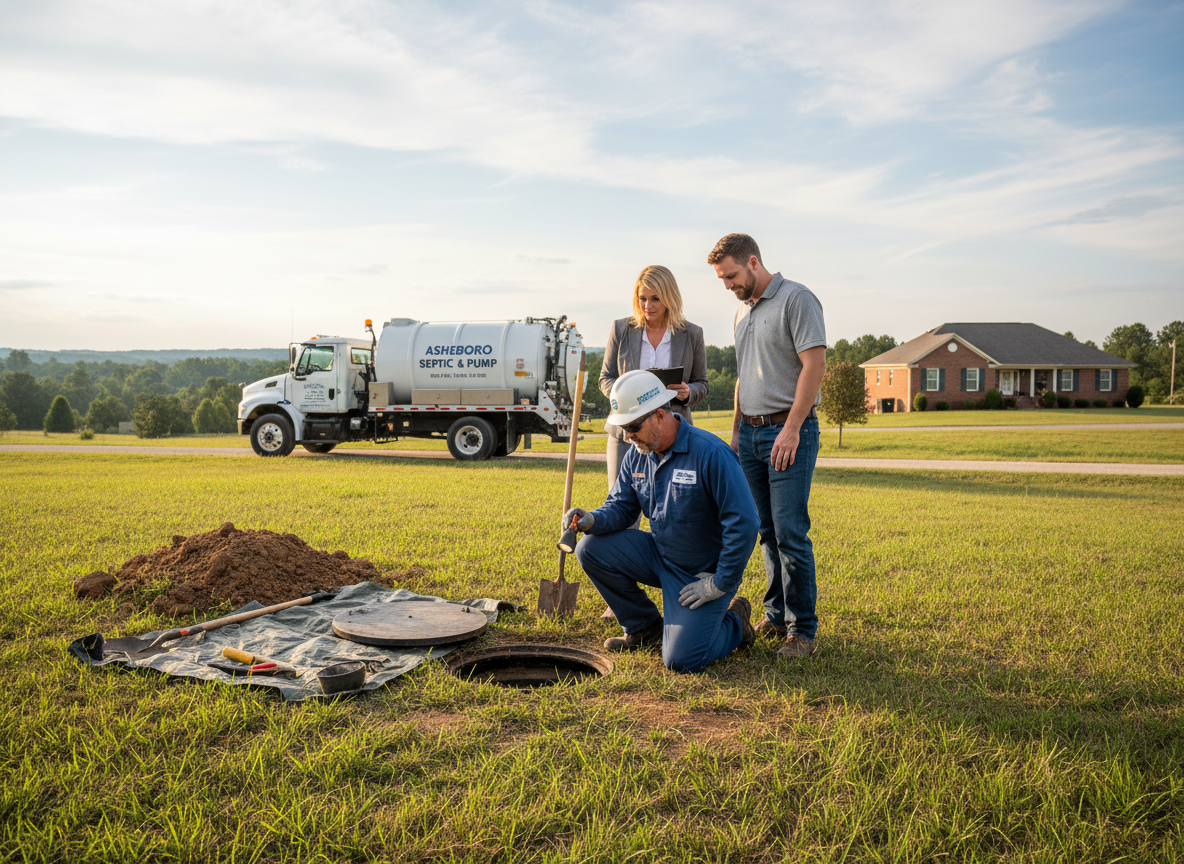
A real estate septic inspection in North Carolina typically lasts 2–4 hours and focuses on confirming the system handles household waste without surfacing or backing up. Inspectors locate the tank, measure sludge and scum layers, check baffles, and evaluate the drain field absorption rate. In Randolph County, older homes in Downtown Asheboro and North Asheboro often feature tanks installed before modern permitting standards, so inspectors pay extra attention to outlet filters and potential root intrusion from nearby trees.
Tank and Component Evaluation
Inspectors begin by uncovering the tank lid and pumping out enough liquid to inspect the interior walls and inlet/outlet pipes. They measure the distance from the liquid surface to the top of the sludge layer, noting whether buildup exceeds one-third of the tank depth. In the humid subtropical climate of Randolph County, frequent rainfall can saturate clay-heavy soils around the tank, making it harder to distinguish normal moisture from leaks. Baffles receive close scrutiny because older concrete tanks common near the Asheboro Amtrak Station can crack along seams after decades of exposure to shifting Piedmont soils. Homeowners in nearby Greensboro or Lexington sometimes discover that missing effluent filters allow solids to reach the drain field, shortening its effective lifespan. Septic inspection reports always document these measurements so buyers understand remaining capacity before closing.
Drain Field Assessment in Local Soil Conditions
The drain field evaluation involves walking the absorption area for wet spots, odors, or stressed vegetation while probing soil moisture at multiple points. Randolph County’s Piedmont clay slows percolation, so inspectors often perform a basic perc test or review historical loading rates when records exist. Heavy summer thunderstorms common in the region can mask slow-draining fields until the next dry spell, which is why inspectors note recent weather patterns. Properties near the North Carolina Zoo frequently sit on sloped lots where effluent can channel rather than disperse evenly, increasing failure risk. Signs your drain field is failing in Piedmont clay often appear first as slow drains indoors rather than obvious surface water. Buyers should request the exact location of laterals so future maintenance crews can avoid driving over them.
Preparing Documentation and Site Access
Sellers are expected to provide any prior pumping receipts, repair permits, or as-built drawings before the inspector arrives. In North Asheboro, many lots have tanks buried under driveways or patios added after the original installation, requiring extra excavation time. Inspectors also check for risers that bring access points to grade, a feature that simplifies future septic tank pumping visits. Homes built before 1990 in Randolph County rarely have these risers, so inspectors flag the added cost of locating the tank during the visit. Clear access to the tank and drain field on inspection day prevents delays that could push closing dates. How often should you pump a septic tank in Randolph County depends on household size and tank volume, information the inspection report will reference when estimating remaining useful life.
Post-Inspection Recommendations
The final report lists any immediate repairs needed for the sale to proceed along with projected maintenance intervals. In humid Randolph County conditions, even minor baffle damage can allow solids to migrate quickly once seasonal rains resume. Buyers often schedule a follow-up real estate septic inspection after repairs to confirm the system meets lender requirements. When the report notes marginal drain field performance, owners in areas like Archdale or Trinity may choose to install a septic filter or alarm before problems escalate. The inspection ultimately gives both parties a clear picture of system condition rather than a pass-fail verdict.