2026-11-08 ·
Why Your Septic Alarm Is Going Off
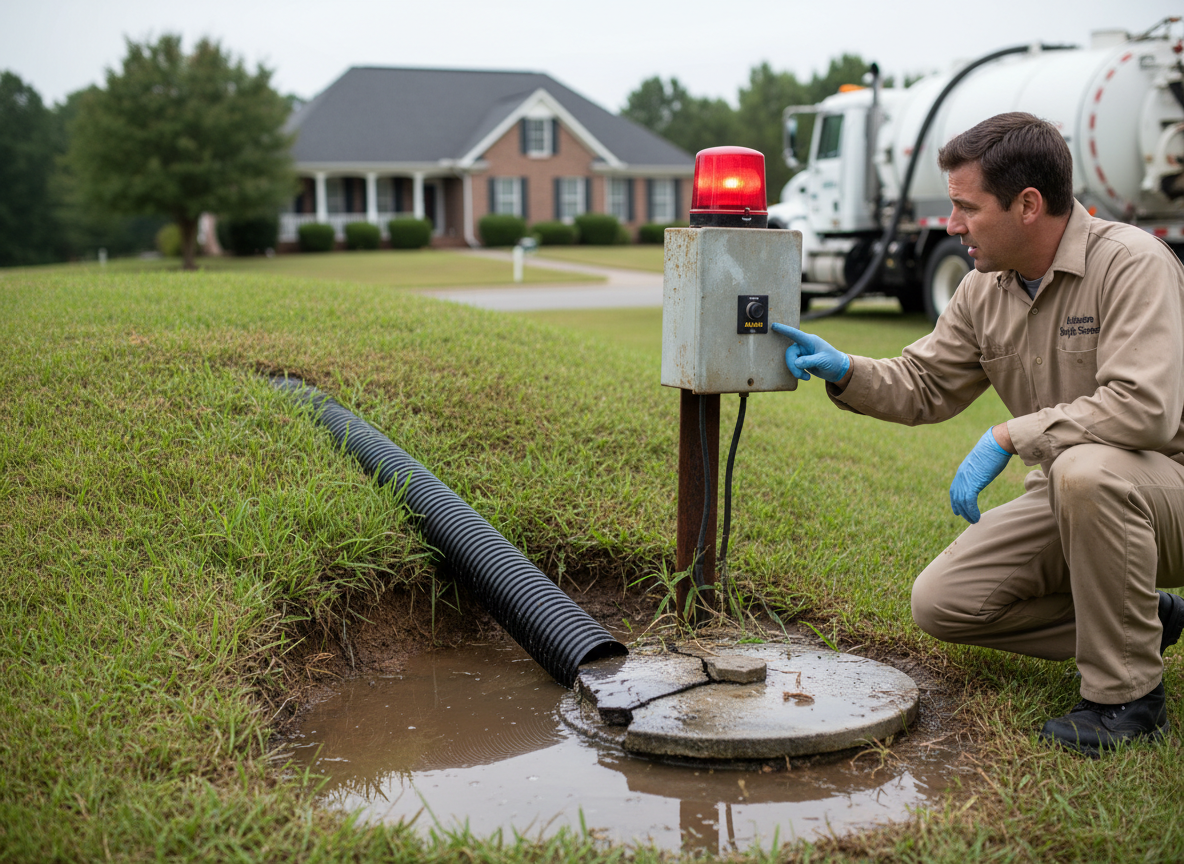
In Asheboro homes the septic alarm typically sounds because the water level inside the tank has climbed above the normal operating range, most often from a pump that stopped working or a drain field that cannot absorb effluent after heavy rain. Randolph County's Piedmont clay holds moisture longer than sandy soils, so even moderate storms can push systems past capacity in neighborhoods like North Asheboro where many homes predate modern drain-field sizing. The first step is to locate the alarm panel near the tank or inside the house and note whether the light indicates a high-water or pump-failure condition before any further action.
High Water Levels After Local Storms
Heavy rainfall common in Asheboro's humid subtropical climate can overwhelm drain fields within 24 to 48 hours, especially on lots near the North Carolina Zoo or along routes to the Asheboro Amtrak Station where older homes sit on smaller parcels with limited absorption area. When the field saturates, liquid backs up into the tank and trips the float switch that powers the alarm. Homeowners in Downtown Asheboro often see this pattern after summer thunderstorms because many systems were installed before current Randolph County setback rules required larger fields. Checking the tank through the access port reveals whether the liquid is within 12 inches of the outlet pipe; if it is, immediate pumping prevents sewage from surfacing in the yard.
Pump and Float Switch Failures
Submersible pumps in septic tanks serving Lexington Road and Greensboro Highway properties typically last 8 to 12 years before the motor or impeller wears out. When a pump stops, the alarm activates within hours once daily water use pushes the level past the high-water float. Float switches can also stick from grease or paper buildup, giving a false high-water reading even though the pump still runs. A quick test involves lifting the float by hand; if the alarm silences and the pump engages, the switch needs replacement rather than a full pump swap. These components sit inside the tank at 208 W Salisbury St addresses, so access requires removing the riser lid and working around live wires.
Drain Field Limitations in Piedmont Clay
Clay soils throughout Randolph County slow percolation rates, so systems installed before 1990 often lack the square footage needed for today's household water use. Properties near the NC Zoo experience additional stress from tree roots that invade perforated pipes and reduce flow. When the field can no longer accept effluent, the tank fills faster than the pump can empty it, triggering the alarm repeatedly. Residents in North Asheboro notice gurgling toilets or slow drains days before the alarm sounds, signaling the field is already compromised. Professional inspection can measure absorption rates and confirm whether partial field replacement or full relocation is required.
Next Steps and Professional Help
Turn off household water use immediately when the alarm sounds to keep the tank from overflowing, then contact a local service that offers septic tank pumping and septic inspection. In many cases a single pumping restores normal operation until the underlying cause is fixed. For recurring alarms, schedule an evaluation of the drain field through drain field problems service or review seasonal pumping needs in the article How Often Should You Pump a Septic Tank in Randolph County. Early attention prevents sewage backups that affect yards near the Amtrak Station and keeps systems compliant with county health rules. Bicentennial Septic at 208 W Salisbury St # B, Asheboro, NC 27203 can be reached Monday through Friday between 9am and 7pm for these evaluations.